
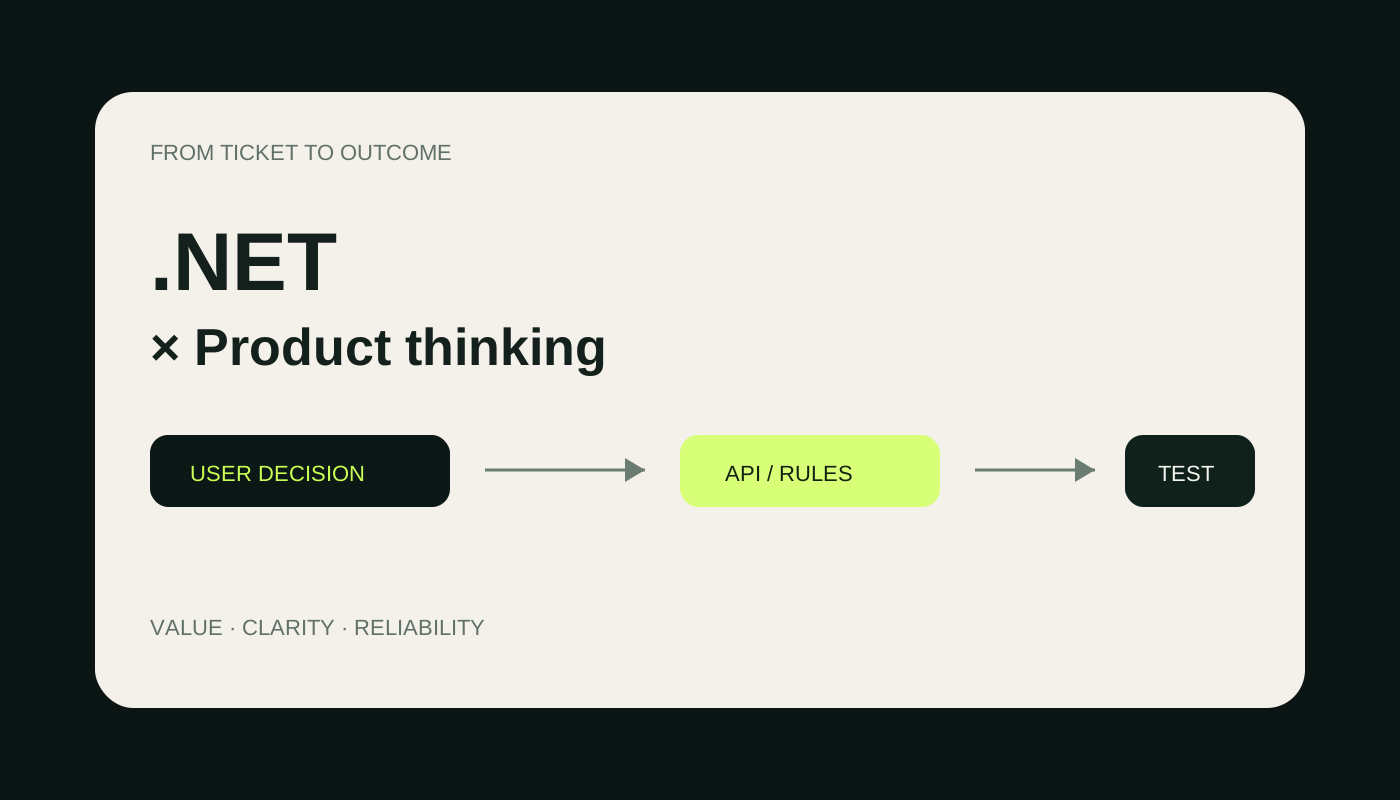
From the ticket to the user decision
A ticket can request an endpoint, validator or new property. But software does not exist to satisfy the ticket; it exists to enable an action or prevent a mistake.
Once that user decision is understood, technical choices often become simpler. API contracts, error messages and edge cases stop being separate details and become part of one experience.
Validations tell the product story
In business systems, validation is rarely just a boolean condition. It expresses a rule, an intention and sometimes a regulatory constraint. Good validation tells the client what must change and stays consistent across layers.
Product thinking therefore treats error codes, HTTP statuses and edge scenarios as a public interface rather than an internal implementation consequence.
Tests as documentation of outcomes
A useful test does not only prove that a method returns a value. It captures the behavior the product promises. That distinction matters when code changes while intent must remain stable.
I therefore prefer tests named around the scenario and observable outcome. They become both a safety net and executable documentation.