
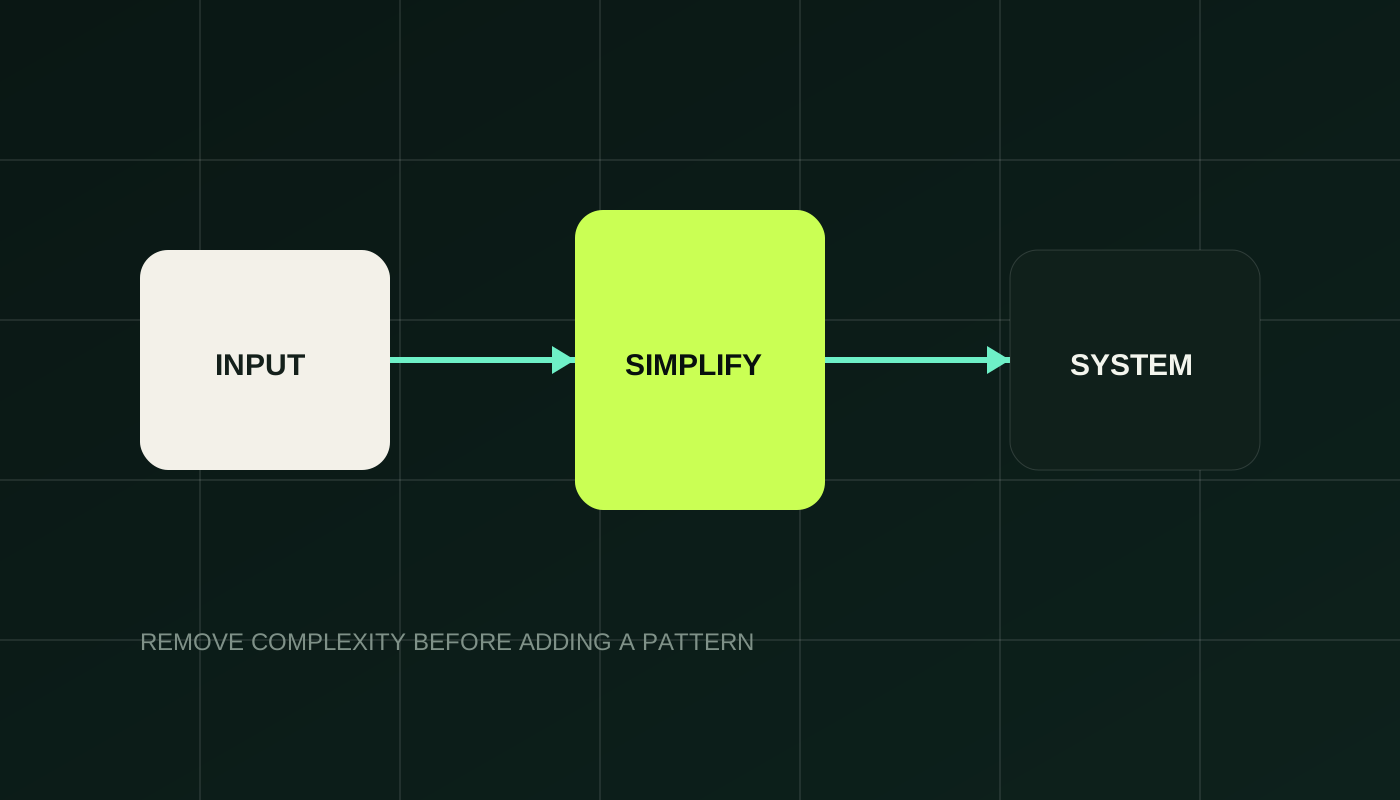
Complexity does not disappear
Architecture can move complexity around; it rarely eliminates it. Adding layers, abstractions and interfaces can make some changes safer — or simply force every developer through more files to understand a simple rule.
The question is therefore not “is this pattern recognized?” but “which ambiguity or risk does it remove here?”
Start with boundaries
Before patterns, I prefer to clarify boundaries: who owns the data, where the business rule lives, which contract is public and which failure is allowed to cross the boundary. Those decisions usually matter more long term than folder structure.
When boundaries are clear, useful patterns often emerge naturally.
Optimize for the next reader
Code will be read far more often than it is written. Professional architecture should therefore optimize not only for extensibility but also for comprehension.
If a new team member can follow a request from endpoint to business rule and understand why each step exists, the architecture is already producing value.